
The best things to do in Rawalpindi, Pakistan
This post is about the best things to do in Rawalpindi. Rawalpindi is the twin city of Pakistan’s capital Islamabad. Although they are twin cities, their characters couldn’t be more different from each other.
Where Islamabad is modern, clean and orderly, Rawalpindi is a chaotic city steeped in history. Rawalpindi, commonly known as “Pindi,” has deep roots dating back centuries.

Why visit Rawalpindi
Islamabad is a gentle introduction to Pakistan, but to get a real taste of the country’s hustle and bustle you should visit Rawalpindi. An easy and worthwhile day trip from Islamabad.
There are few formal tourist sights in Rawalpindi, but getting lost in the maze of narrow alleys is a wonderful experience. Within it’s old city you will find lots of hidden gems.
Honestly, the bazaar area can be very intense and maybe even a bit intimidating. The smells, noises and crowds can be overwhelming. But, the people are extremely friendly and welcoming. Before you know it, people offer you a cup of tea or invite you in one of the truck art workshops. So take your time wandering around and Rawalpindi will surprise you.

Things to do in Rawalpindi
Raja bazaar
One of the best things to do in Rawalpindi is a visit to Raja bazaar. Raja Bazaar is one of the oldest, busiest, and most vibrant markets in the old city. Whether you’re visiting during the day or early evening, you will find the market full of people.
Raja bazaar is so tightly packed with shops and stalls that it can be difficult to navigate.Within the bazaar area, there are smaller, specialized markets catering to specific items. One market is even more colorful than the other. Examples are moti bazaar (bridal wear), bara bazaar (electronics), sabzi mandi (vegetable market) and sarafa bazaar (jewelry).
This is a great place to wander around and buy yourself Pakistani clothes such as a shalwar kameez or another souvenir.

Lal Haveli
Some of the older buildings in Rawalpindi’s old city, date back to the pre-partition era. The 19th century Lal Haveli is one of them and one that you will easily recognize. The building’s architecture reflects Mughal influences with intricate woodwork and a bold red facade.
Before partition, Lal Haveli belonged to a wealthy Hindu family. But in its more recent history, the famous politician Sheikh Rasheed Ahmad bought it. He used the haveli as a venue for political meetings.

Rawalpindi’s Hindu temples
When you walk through Rawalpindi’s old town you will see lots of remnants of its rich Hindu past. A past that people rarely talk about in Pakistan. Before the partition of British India in 1947 there was a large Hindu community. As tensions rose between the Hindu, Sikh, and Muslims during the partition, many Hindus fled to India to escape the widespread communal violence.
While there are a few Hindu temples that still exist in Rawalpindi today, many are in a state of disrepair. Nevertheless, it is interesting to see the ancient temple spires, rising up above the buildings. They stand as silent witnesses to the once-thriving Hindu community.
Krishna Mandir is one of the few surviving and functioning Hindu temples. The small Hindu community still uses the temple for religious ceremonies, especially during festivals like Diwali and Holi.
On Google maps: ganj mandi hindu mandir; shri ganesha temple; former Hanuman temple; sree Krishna mandir
Jamia Masjid
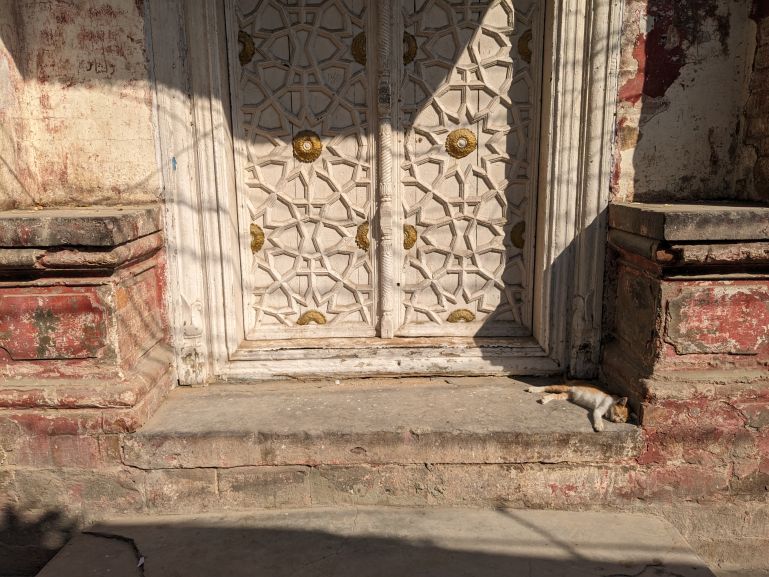
The Jamia Masjid in Rawalpindi is the most important mosque for the local Muslim community. It is a relative new building from the 20th century built to accomodate the friday prayers.
Jamia Masjid is known for its beautiful Islamic design elements inspired by the famous Mughal architecture. The mosque’s facade includes large domes and intricate floral and geometric patterns. It is not as majestic as other Mughal masterpieces like the Taj Mahal in Agra or the Red mosque in Delhi, but the similarities are obvious.

Dargah Shah Chan Chiragh
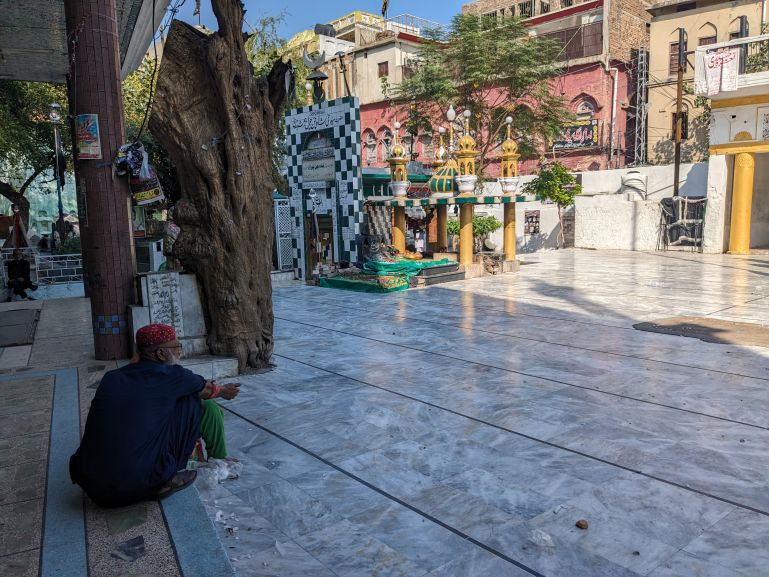
Religious life in Rawalpindi does not only evolve around its mosques, but also around its hidden sufi shrines. The Dargah of Shah Chan Chiragh is a shrine dedicated to a 16th century Sufi saint from the Mughal era.
He was part of the South Asian Chishti Sufi order that promotes love, tolerance, and devotion to God. The name “Chan Chiragh” means “Light of the Moon”, symbolizing his spiritual enlightenment.
As with many Sufi saints, miracles are an important part of his legacy. One of the legends associated with Shah Chan Chiragh is the story of a divine light that shone wherever he went. Devotees also believe he healed the sick and wounded.
People from all backgrounds, irrespective of their religious affiliation, visit the shrine. The urs (death anniversary) of Shah Chan Chiragh is an especially significant event. There will be a large gathering at the shrine with spiritual recitations and qawwali (Sufi devotional music).
The shrine in Rawalpindi is a small shrine and during the week it is relatively quiet, giving you a good chance to experience the peaceful atmosphere.
Rawalpindi Truck art
Pakistan Truck art is one of the most vibrant forms of folk art in Pakistan. It involves the highly decorative painting of trucks with colorful motifs, intricate patterns, and cultural symbols as well as bells, mirrors and jangling chains. Hence, the name Jingle truck.
Rawalpindi is a great place to see the famous jingle trucks. There are several truck art workshops and a visit to one of the truck yards is one of the most interesting things to do in Rawalpindi. Seeing that most of these truck decorations are still made and painted by hand, makes these jingle trucks all the more impressive.

Try Rawalpindi Street Food
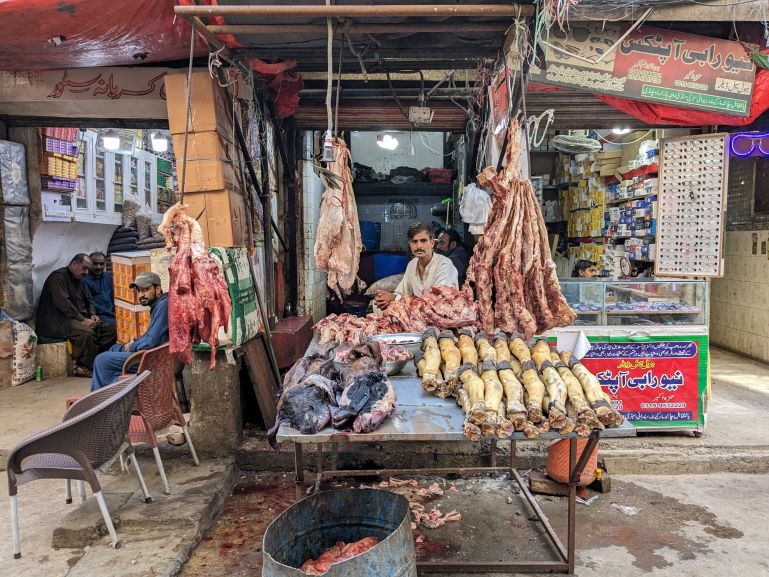
Street food in Rawalpindi is an essential part of the city’s vibrant culinary culture, offering a variety of delicious, flavorful, and affordable dishes that reflect the rich traditions of Punjabi and Pakistani cuisine.
Samosas: Samosas are one of the most iconic street foods in Rawalpindi. These triangular, deep-fried pastries are filled with spicy potatoes, peas, and sometimes minced meat. Samosa vendors are at almost every street corner, and people enjoy them as a quick snack or with a cup of chai (tea). People eat them with chutneys, such as tamarind or mint sauce, adding a tangy or spicy flavor.
Pakora: Another staple street food is pakoras. Pakoras are deep-fried fritters that can have a variety of ingredients like potatoes, onions or chilies. They are battered in a spicy gram flour (besan), before frying, creating a crispy and flavorful snack.
Nihari: Nihari is a traditional Pakistani dish with slow-cooked beef or mutton in a rich, spicy gravy with a sprinkle of lemon juice. People eat it with rice, naan or roti (flatbread). In Rawalpindi, many street vendors sell nihari as a breakfast or late-night meal.
Karahi: Karahi is one of the most popular and iconic dishes in Pakistan, known for its rich, flavorful, and spicy taste. It is a type of stir-fry curry that is traditionally cooked in a karahi. A karahi is a round, deep, thick-bottomed, wok-like cooking vessel made of cast iron. The gravy includes tomatoes and spices and tastes wonderful.
Rawalpindi Travel Tips
Where to stay
You can easily visit Rawalpindi on a day trip from Islamabad. Therefore I recommend you stay in Islamabad where you have a better choice of sleeping options
Shelton’s Ambassador: I stayed a couple of nights at Shelton’s Ambassador. The hotel offers good value for money and has a nice and safe location in the blue zone. I was the only foreign visitor, so I got some curious stares at the breakfast buffet from the other visitors that were mostly Afghan families.
Holidazzle Lodge: I was supposed to stay in the Holidazzle Lodge, but at the last moment they could not accommodate me. They booked the E-Lodge for me with hundreds of excuses and even came to visit to apologize once more. I can not comment on the room, but the owner is very friendly and helpful.
How to get there
Taxi: Rawalpindi is located very close to Islamabad. The best way to reach Rawalpindi is by taking a taxi. Indrive and Careem are popular taxi hailing apps.
Metro bus: The new Metro Bus is a very cheap way to travel from Islamabad to Rawalpindi. A good option if your hotel in Islamabad is near one of the metro bus stations
Train: Rawalpindi Railway Station is a central hub for travelers coming from various parts of Pakistan. Pakistan Railways operates several trains that run between Rawalpindi and major cities such as Lahore, Karachi and Peshawar. It’s advisable to book tickets in advance, especially for long-distance trains.
Bus: Rawalpindi has a network of intercity bus services that run from various cities including Multan (8 hours), Peshawar (3 hours) and Lahore (5 hours). Popular bus companies are Faisal Movers and Daewoo express.
How to get around
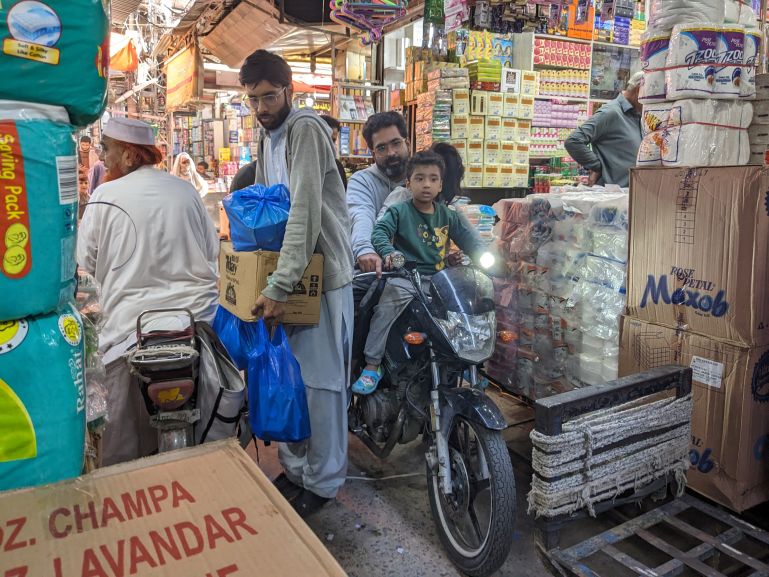
Once you are in Rawalpindi you will find most sights are in the busy bazaar area. Because of the narrow and crowded streets, it is best to explore Rawalpindi on foot. Otherwise there are plenty of rickshaws and taxi’s.
When to visit
The best time to visit Rawalpindi is during the spring (March to May) and autumn (September to November). Both seasons offer mild temperatures ranging from 20 to 30 degrees Celsius.
Summers in Rawalpindi (June to August) can be hot and huumid, with temperatures reaching 40 degrees Celsius or more, so it’s advisable to avoid this season if you’re not comfortable with high temperatures. Winters (December to February) are cold and foggy.
Disclaimer: This post with a travel guide about the best things to do in Rawalpindi contains affiliate links. If you buy any service through any of my links, I will get a small commission at no extra cost to you. These earnings help me to keep Backpack Adventures alive! Thanks for your support!
Stumbled on this by accident but glad I did. Fills a gap in most of the other content out there on the subject.