
Hiking the Célé Valley: Complete Guide from Figeac to Cahors
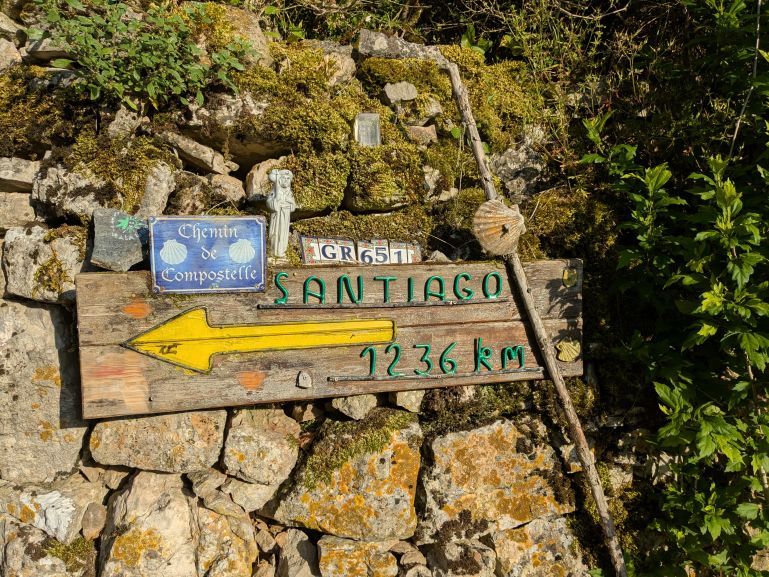
This post is about hiking the Célé Valley variant on the Camino le Puy from Figeac to Cahors for hikers and pilgrims. The GR651 trail from Figeac to Cahors is going into the remote Célé valley and is one of the many camino routes in France.
From Figeac you basically have three choices on the Camino le Puy to walk to Cahors. One is to keep following the main GR65 route on the Via Podiensis. Then there is the Rocamadour trail that goes through the famous pilgrimage village of Rocamadour. But the most scenic trail is the GR651 into the Célé valley.
The GR651 is slightly longer and more challenging than the traditional GR65 trail, but in my opinion, the beautiful scenery is well worth the extra time and effort.
Why hike the Célé valley variant
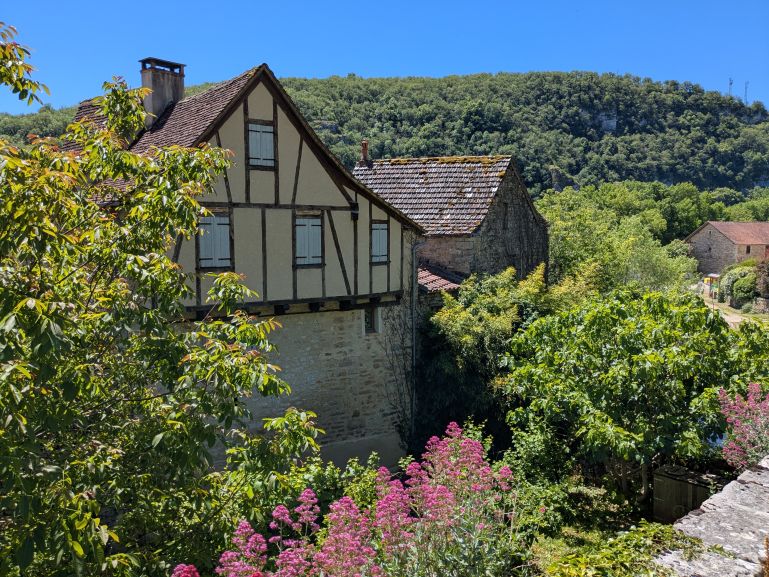
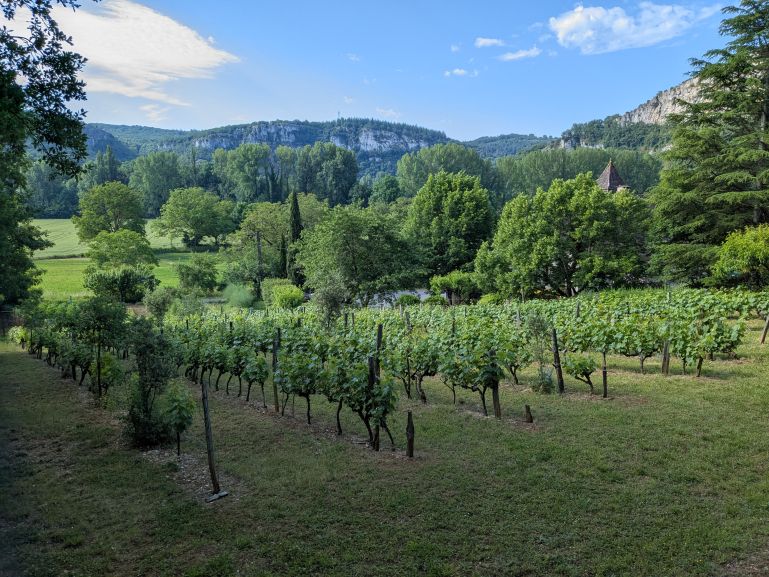
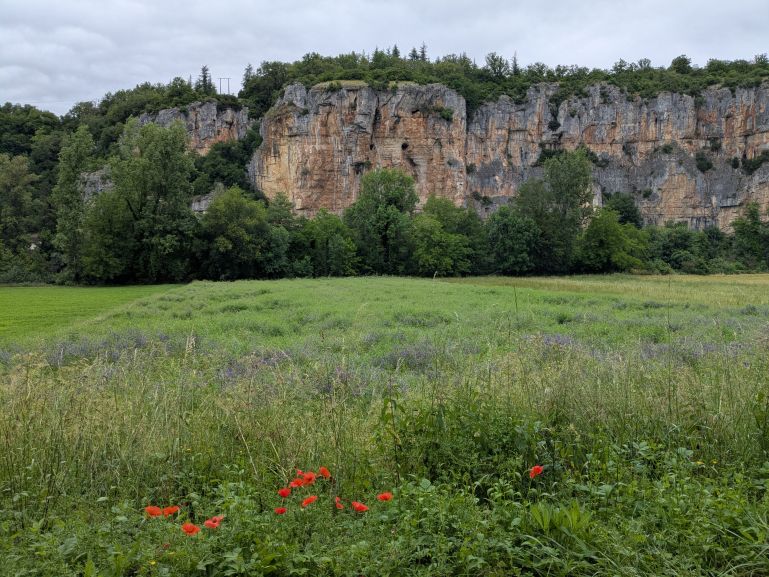
I was very happy with my choice to hike the GR651 Célé Valley variant when walking the french Camino le Puy, even though it added three more days to my Camino le Puy itinerary. The Céle Valley lies within the Causses du Quercy Regional National park, featuring forests, riverside landscapes, deep valleys and limestone cliffs.
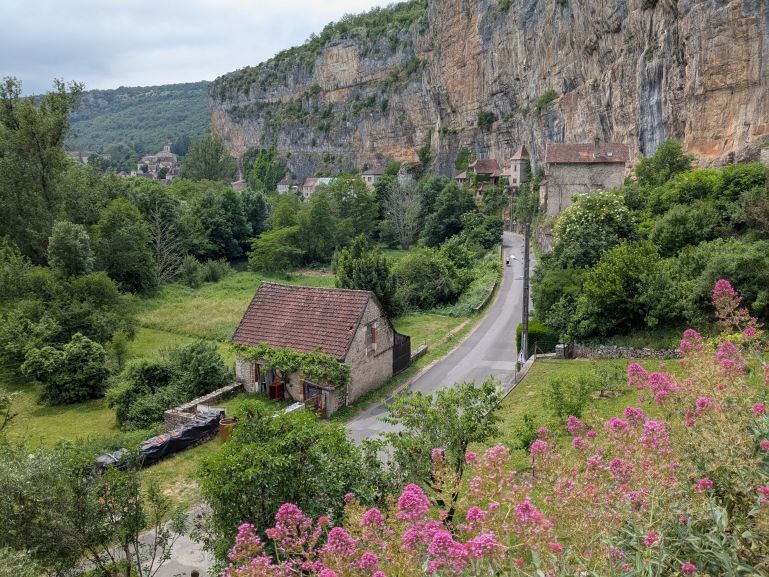
The Célé valley has lots of interesting villages too. Some are built almost inside the cliffs. In some places you can see traces of ancient cave homes that reminded me of other troglodytic cave villages like Kandovan in Iran or Vardzia in Georgia. The history of this area goes way back and a highlight are the 29.000 year old cave paintings at the Pech Merle cave.
Another highlight is the cute village of Saint Cirq lapopie that was awarded with being the most beautiful village in France in 2012. It was for sure very picturesque and marks the end of the Célé Valley hike before rejoining the traditional GR65 route on the Via Podiensis.
Where the GR65 can feel crowded with french pilgrims, the GR651 through the Célé valley is still a lesser known variant and therefore much more quiet and peaceful. Some pilgrims are deterred by the fact that the GR651 is more challenging and involves more climbs and descends. Although this is true and makes for a more varied hike, I would say the Célé Valley hike is still doable for any moderately fit hiker.
My Célé valley variant hike
I started my hike into the Célé Valley from Figeac. A beautiful medieval town in the Lot department with a train station. Therefore it is a practical place to start (or end) your hike. At Figeac you can choose between three variants that run from Figeac to Cahors. The GR65 trail, the Célé variant and the Rocamadour variant.
After lots of research, I decided on the Célé valley as it promised to be the most scenic route of the three. Like the year before I choose to hike in June hoping to walk in the sweet spot before the summer heat, but after the chilly and rainy days of early spring. Last year this worked out fine, but this year there were already some very warm days.
There are some nice things to do in Figeac. Make sure you have some time to explore this scenic town. One day is enough to wander around its medieval streets.
Accomodation in Figeac: For pilgrims accomodation in Figeac you can stay at the Donativo run by the church called the gite du Carmel. If you are not a pilgrim or prefer more privacy you can stay at Le Fauborg with private rooms that offer good value for money. Hotel La Quatorze is a more luxurious option with nice rooms in the center of Figeac.
The Célé valley variant Itinerary
Day 1: Figeac – Espagnac Saint Eulalie (25 km)
Leaving the train in Figeac with my backpack it feels very good to be back on the Camino le Puy to Santiago. My heart rejoices at seeing the first red and white markings, showing I am, once again, on the GR65.
The first day to Espagnac is 25 kilometers and starts with a long, but gradual climb into the hills above Figeac. As I arrived in Figeac in the late afternoon I decided to hike up to the small village of Faycelles and stay at the Relais de Saint Jacques. It’s one of the few donativo accomodations on the camino le Puy and the owners also run Fleur au chapeau, a project for people recovering from a burnout. With the communal pilgrims dinner, I am immediately brought back into the camino spirit.
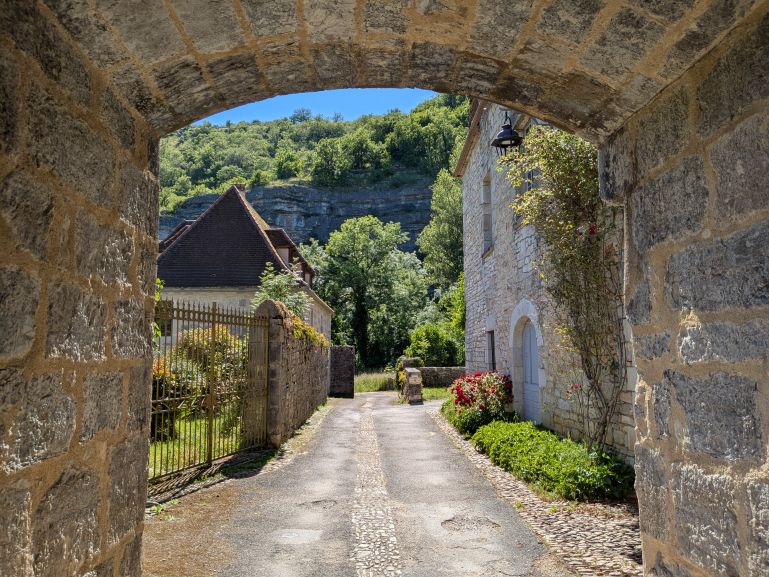
The next morning it is an easy walk to the village of Béduer where the GR651 branches off from the GR65. As a large grooup of pilgrims continue on the traditional camino route, I am the only one entering a narrow path into a forest that brings me to Corn. The first village on the Célé route and one that seems to come out of a fairytale with its medieval houses and flowers.
After Corn, the trail goes through dark and mossy forests that bring shade on this warm and sunny day. Espagnac is another fairytale like village and I am staying in the communal pilgrims accomodation
Highlights: cute village of Faycelles and Corn, dark mossy forests before Espagnac, Gite communal in Espagnac. The gite is in the ancient 12th century priory of Notre Dame du Val Paradis that was once an Augustinian nunnery.
Difficulty: a long climb out of Figeac, but after that an easy hike through farmfields and mossy forests
Rating: 8/10
Accomodation: Gite communal Espagnac (wonderful pilgrims dinner and scenic location)
Day 2: Espagnac Saint Eulalie – Marcilhac sur Célé (16 km)
Even though it is just 16 kilometers from Espagnac to Marcilhac, I made an early start as today promised to be a very warm day with 34 degrees. I am a bit surprised as the trail out of Espagnac leads me right to the cliff walls where the trail goes steeply up to a path high above the river.
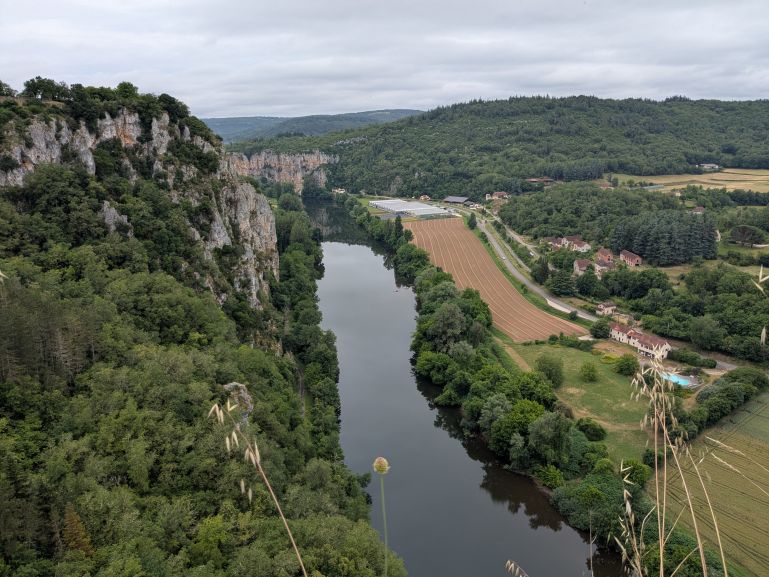
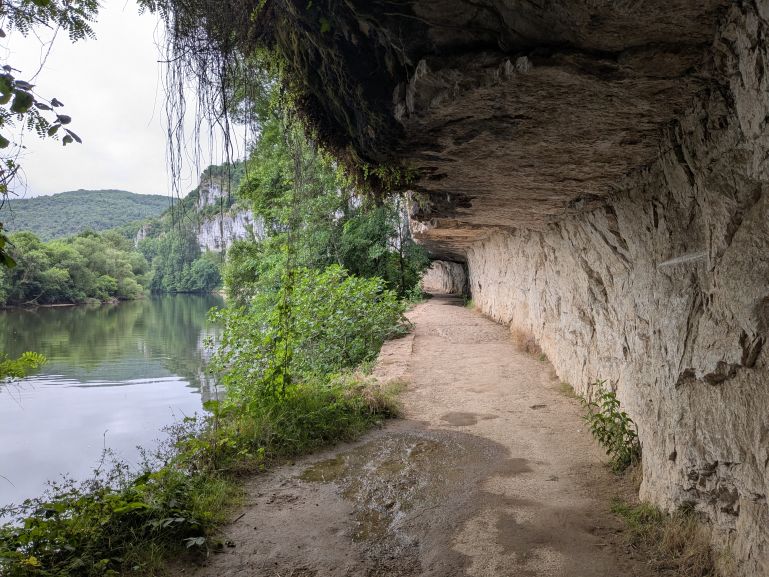
It was very tempting to simply follow the paved road next to the river, that would also bring me to the village of Brengues, but I am glad I took the challenge to climb up over the rocky trail. In the end, it wasn’t that bad and the panoramic views over the Céle valley were well worth it.
In Brengues I took a well deserved break and stocked up on some snacks and a sandwich. After Brengues the path went up again, but luckily this time more gradual and it was a nice walk to the next village of Saint Sulpice. Saint Sulpice is a very small village with no facilities, but the scenery is superb. The ancient houses are built right next to the cliff. Just outside of the village I found a great lunch spot in a cavelike dwelling that was once a bakery.
More gradual up and downs followed in the second part of the day, but it was a pleasant hike from Saint Sulpice to Marcilhac. Marcilhac is a small, but beautiful village. At the medieval Abbey I get a beautiful stamp in my credential and a free lecture about the Hundred Years War between France and England that apparently had a lot of impact in the Célé river valley.
Highlights: Scenery around Saint Sulpice, cliffside villages and remnants of cave dwellings, medieval Abbey of Marcilhac sur Célé
Difficulty: moderate with lots of ups and downs
Rating: 9/10
Accomodation: Gite Saint Pierre (very close to the medieval Abbey of Marcilhac sur Célé).
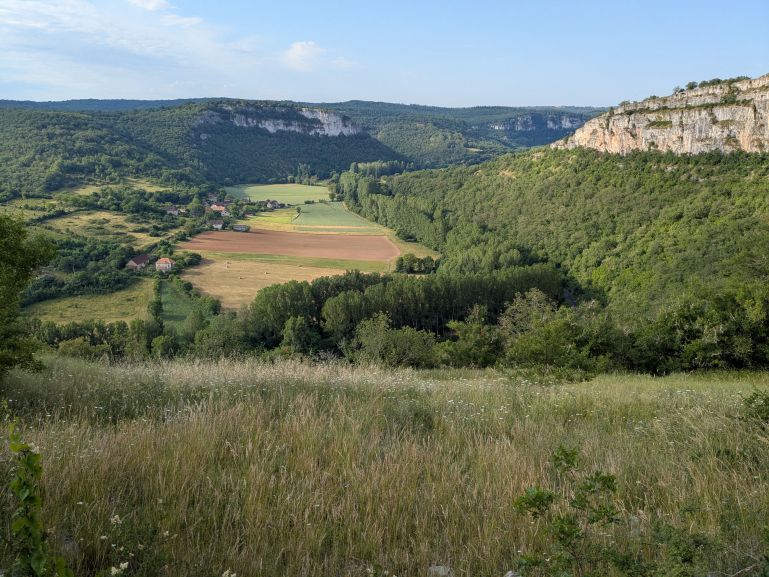
Day 3: Marcilhac sur Célé – Cabrarets (19 km)
Like yesterday, the day starts with an uphill climb to follow a path high above the river with beautiful views over the Célé river. Today I pass through lots of ancient stone walls build by farmers in the past. The Causses du Quercy is famous for these ancient traditional structures made of dry rocks with a unique technique of overlapping stones. The Gariotte is a small stone shelter and the Cazelle a round storage facility.
As I follow the trail I see a couple of the rounded cazelle structures. It’s obvious that there used to be lots of farming activities in this area, but it now almost feels abandoned. Although the walls still stand, a lot of the Cazelle and Gariotte structures are falling apart.
I was planning a lunch break at Sauliac, but to reach the facilities of a camping I needed to get off the trail and go downwards to the river. I had enough climbing up and down in the past days and therefore decided to continue along the path high above the river and next to the cliff. The views into the Célé river valley are wonderful.
Again I see some remnants of ancient cave dwellings. The descent into Cabrerets is beautiful and Cabrerets is another town where homes are built into the cliff side. I can see how people used to live in caves here and Cabrerets is most famous for the 20.000 year old cave paintings of Pech Merle.
Highlights: Views from Sauliac, descent into Cabrerets
Difficulty: easy with less climbing compared to the previous days
Rating: 9/10
Accomodation: Gite du Barry (nice pilgrims dinner and central location in Cabrarets)
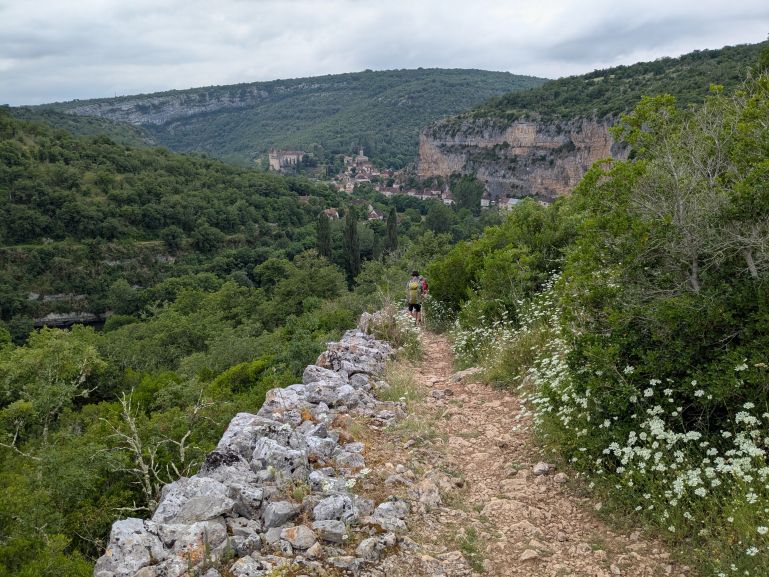
Day 4: Cabrarets – Saint Cirq lapopie (11 km)
It is only 11 kilometers from Cabrerets to the small and cute village of Saint Cirq Lapopie. A short day, but there are a lot of things to see and do today.
As you leave Cabrerets, you will walk past the 20.000 year old cave paintings at Pech Merle. The museum to see the paintings opens at 09:30 and it is best to book your tickets online beforehand. Outside there is also a small exhibition about the history of the earth and humanity.
The GR651 officially ends at Bouziés, but to visit Saint Cirq Lapopie the path continues right next to cliff walls and the Célé river at the Chemin des Halage. Beautiful scenery all along the way. There is a final steep climb to Saint Cirq Lapopie. A small, but very cute village that definetly deserves some of your time wandering around the streets with its traditional homes.
Highlights: Cave paintings of Peche Merle, chemin des Halage, Saint Cirq lapopie
Difficulty: easy, only the last climb up to Saint Cirq lapopie is somewhat difficult.
Rating: 9/10
Accomodation: Gite Lou Bolat
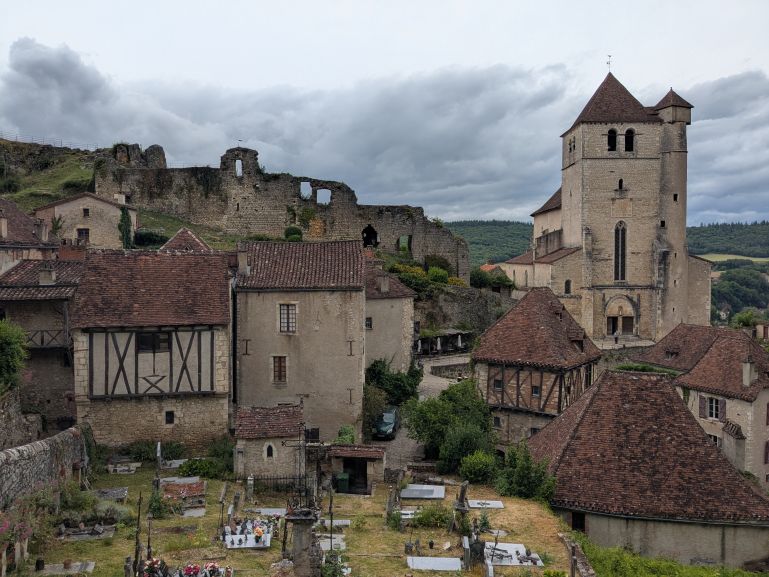
Day 5: Saint Cirq lapopie – Vaylats (22 km)
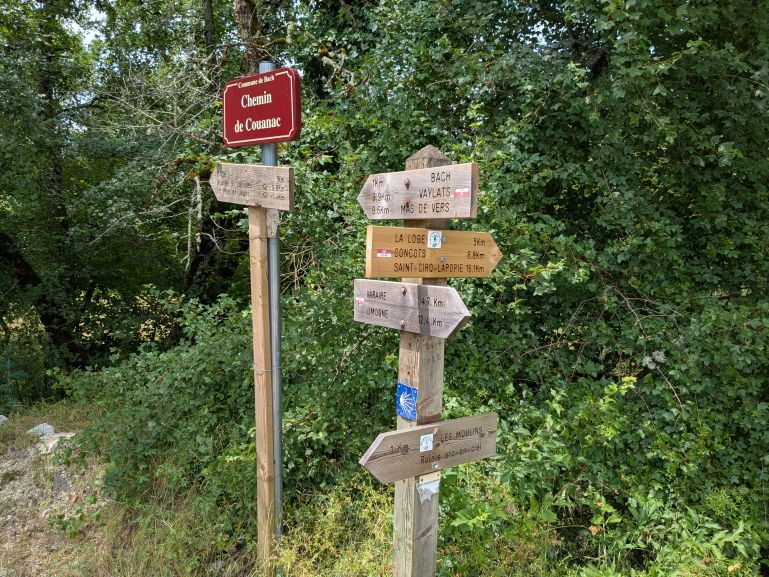
As you leave Saint Cirq Lapopie, you leave the Célé valley behind you. There are two ways to reach Cahors from Saint Cirq Lapopie. One is to go back to Bouziés and then follow the GR36 to Vers and Cahors along the river. The other option is to hike to Bach where you connect with the GR65 Camino le Puy to Cahors. Both versions take two days to reach Cahors.
Although most people keep following the river on the GR36, I wanted to stay in the nunnery at Vaylats. From Saint Cirq Lapopie it is an easy hike through the forests to the nice village of Concots. At Bach I reconnect with the GR65 trail.
The Vaylats nunnery is a wonderful building. The pilgrim hostel is now run by a group of enthusiastic volunteers as most nuns are too old to play an active role in welcoming and feeding the pilgrims. One of the nuns did come by after our communal dinner to bless the pilgrims and wish us luck on our journey.
Highlights: nunnery at Vaylats
Difficulty: easy
Rating: 7/10
Accomodation: Couvent Vaylats
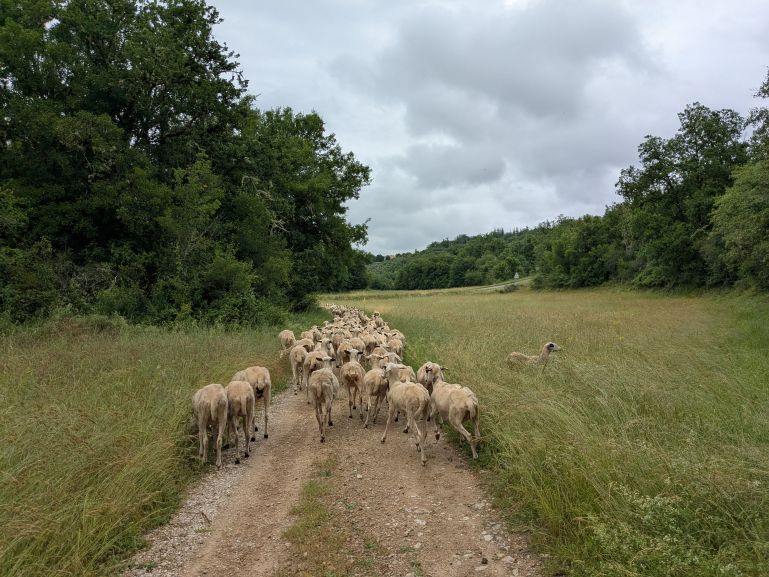
Day 6: Vaylats – Cahors (25 km)
From Vaylats it is back into the ancient farm country of Causses du Quercy with its old stone walls and the occasional Gariotte or Cazelle. I just happened to pass by a Gariotte as it started to rain heavily and it was just big enough for me to shelter from the rain.
When the rain stopped I came across a herd of sheeps on the path that first ran away from me, but then curiously followed me from a distance. Unlike the ancient farms in the Célé valley that were abandoned, farms are still active here. The path goes through wheat fields and other farmlands before descending into the city of Cahors.
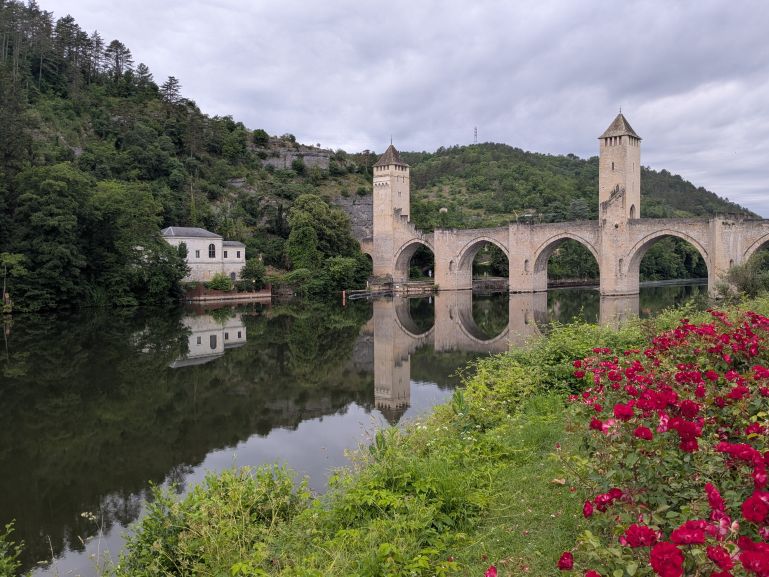
Highlights: medieval town of Cahors
Difficulty: easy
Rating: 7/10
Accomodation: Le deuxieme souffle (friendly owner and great camino spirit)
The Célé Valley hike Travel Tips
How to Prepare for the Célé valley hike
Training: Some people have a training schedule to build their endurance before hiking the camino in France. I did not do this, but I spend my weekends doing day hikes with my fully packed backpack. This helped a lot in adjusting my backpack before the trip so that it was comfortable.
Book your Accomodation: Accomodation on the camino in France, including the Célé valley variant, works differently from the Spanish Camino. Pilgrim hotels offer a demi-pension package that includes dinner and breakfast. As they want to know for how many people they should prepare food, you need to reserve your place beforehand. The Célé valley variant also has less accomodation options than the main GR65 route, making it even more important to make reservations in advance.
Learn basic French: french is the main language on the camino le puy. For people that do not speak french, it can feel a bit lonely at times. It really helps if you learn the basics through Duo Lingo beforehand.
Buy the proper gear: if this is the first time you do a multi day hike, you probably need to invest in your hiking gear. There are a lot of fancy and expensive items out there, but in the end you don’t need that much. I will share more tips on investing in your hiking gear below.
Buying Hiking Gear for the Célé Valley hike
Less is more on a multi day hike like the Camino le Puy and more expensive does not always mean better. What is best is what fits you personally. I recommend to go to a local outdoor store and try on a few things.
There are a few items that are worth investing money in. That is a good hiking backpack and comfortable hiking shoes that fit you well. These items have a big influence on the comfort of your trek on the Via Podiensis and it is important you try them out before you go.
Start wearing your shoes frequently on walks to break them in and try out the backpack when fully loaded. It is better to bring old tested shoes with you than brand new shoes that might give you blisters.
At last, I love merino wool tshirts, because they are lightweight, dry quickly and don’t smell. For me, they are worth the extra money. You don’t need more than 2 sets of clothes and lightweight materials will reduce your pack weight. Think layers to adjust easily to differences in temperatures.
For more tips what to bring you can check out my Camino Packing List for women.
Resources on the Célé Valley hike
The resources below have helped me a lot in preparing for the Célé Valley variant of the French camino.
Miam Miam Dodo: the French Miam Miam Dodo is the most up to date and useful guidebook on the Camino le Puy. Although it is in French, the detailed maps with where to eat and sleep on the Via Podiensis, speak for itself. Especially the places where to eat, became useful to look up when I was on the road. They have a special version on the Célé valley variant that also includes the Rocamadour variant.
Internet Forums: The Camino de Santiago Forum is a wealth of information about the camino, including the Célé valley variant. It’s easy to get overwhelmed with the lengthy discussions about the best shoes, socks, backpacks, packing tips, lightweight gear etc. Nevertheless, some of the advice from experienced camino hikers turned out to be very useful.
Facebook groups: Via Podiensis Chemin du Puy & Gr65 Le Puy Route are two facebook groups with lots of pictures of the camino in France, including the Céle valley variant.
If you are interested I made a post with the best books on the Via Podiensis
Accomodation on the Célé Valley hike
The Camino le Puy is one of the most frequented pilgrim routes in France and has a variety of accommodations for its walkers, but because the Célé valley variant is going through more remote regions, there is not as much choice as on the main route.
Most towns in the Célé valley have one or two gite d’etappes, especially for pilgrims as well as more expensive bed and breakfasts. Almost all pilgrim hostels offer a demi-pension package that includes dinner and breakfast.
Costs for the gite d’etappes are usually between 40 to 50 euro a night. This is more expensive than on the Spanish Camino, but considering the elaborate dinners and the quality of the accomodations, I believe it is very good value for money. Dormitories are small and facilities are clean and modern. For me, the delicious french dinners were a highlight of my french camino experience.
Another difference with the camino in Spain is that I do recommend to reserve your accomodation beforehand, especially because the options in the Célé valley are limited. During my hike in May, the hostels I stayed in were all fully booked. I met hikers that had no reservations and had a difficult time finding a place to sleep. The hostels themselves also prefer you reserve your place beforehand, because they want to know for how many people they should prepare dinner.
I made a special post about my favourite pilgrims accomodation on the Via Podiensis
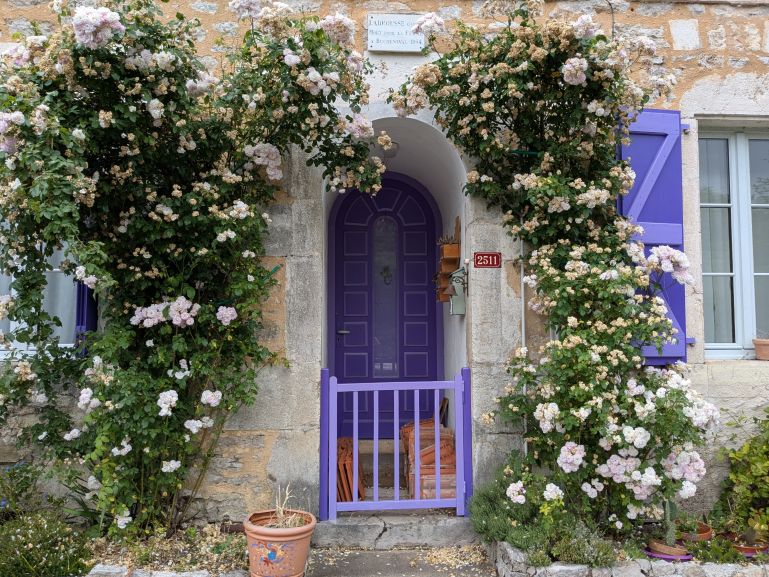
Pilgrims Accomodation etiquette on the Célé valley hike
Most pilgrim hostels only open their doors from 3 or 4 pm onwards. Once they open, most of them will first do the registration. You will pay, get your stamp in your pilgrims credencial and then you can choose your bed in the dormitory. Others do the payment and stamps after the elaborate pilgrims dinner.
Hiking shoes and hiking sticks should stay outside and some hotels on the Via Podiensis won’t even allow your backpack into the dormitory to prevent bedbugs. Because of that, you get a small basket to bring your essential items only and your bags are safely stored outside in a locker room.
Most hostels will provide a sheet and a pillow cover, but you will need your own sleeping bag. At night, the hostels were warm enough that a light summer sleeping bag was sufficient. Most hostels have a special area for washing and drying clothes.
Dinner will be around 7 pm with all the pilgrims and will therefore be a nice moment to meet other people. That said, french pilgrims will be the majority. Although some do try to engage you in the conversation by speaking english, their english language skills diminish as the evening progresses, especially when there is wine on the table. Nevertheless, I have fond memories of the communal meals.
Breakfast starts around 6 or 7 AM and hostels sometimes explicitly ask you to be gone by 8 or 9 AM, so that they can clean and prepare for new pilgrims.
Food on the Célé Valley hike
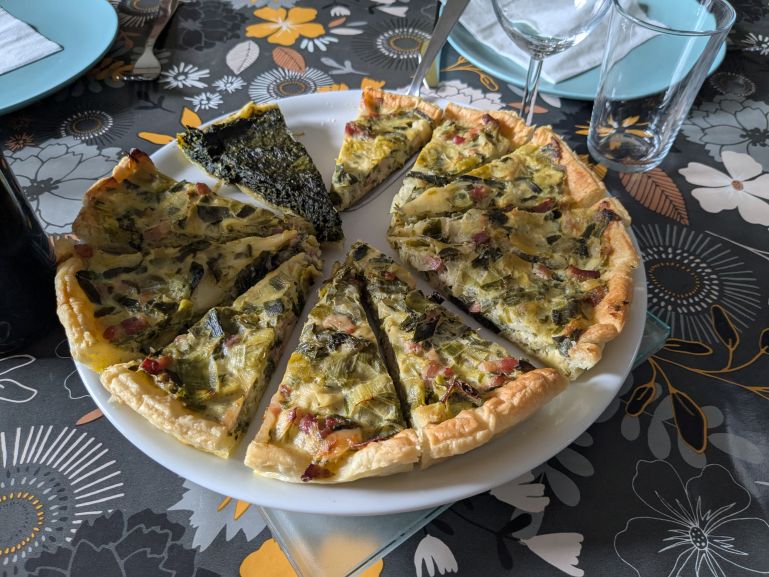
Food was one of the highlights on the french camino. Although restaurants are not that common in the Célé valley, all pilgrim hostels offer a demi-pension package that includes dinner and breakfast. So the communal meal at your hostel is often your only choice, but in my opinion they are better than the average meal in a restaurant and you still get to taste local delicacies such as cassoulet and Rocamadour cheese.
Compared to the elaborate dinners, breakfast was a rather simple affair with bread and jam. Due to the demi-pension packages it was never a problem finding dinner or breakfast. Lunch was a different story.
Especially in the small villages of the Céle valley, there isn’t always a supermarket, store or bakery to buy lunch. It is also important to note that even if there are, most shops and restaurants close down for a midday break from 12:00 to 15:00, even in the larger towns.
Making sure that you have something to eat for lunch requires some planning. I soon developed the habit to visit the lokal bakery or grocery store first thing in the morning or ask the gite to make a picknick sandwich for on the road.
Transport on the Célé Valley hike
How to get there: It is easy to reach Figeac by train. Coming from Paris you need to switch trains in Brive-la-Gaillarde. Cahors also has a train station with direct trains to Paris. You can check the timetables and book your tickets on SNCF. The earlier you book, the cheaper your tickets.
How to get around: public transport in the Céle valley is very limited. You can contact the companies that arrange luggage transfer services that can also transport passengers if needed.
Luggage Transport on the Célé Valley hike
The only luggage transport company on the Camino le Puy that also serves the Célé Valley is the Malle Postale.
When to Walk the Célé Valley hike
Winter: Winter is generally not recommended for the Célé Valley hike. Not only because of the cold temperatures, but also because all the pilgrim services such as accommodations and restaurants are closed from mid october till the end of April.
Spring: May and June are often considered one of the best times to walk the Célé Valley hike. The weather is typically mild, with temperatures ranging from 12°C to 20°C. The landscape is lush and green and the wildflowers are in bloom. Although there may be some pilgrims, it’s not as crowded as the peak summer months, allowing for a more peaceful experience.
Summer: The summer months see the highest number of pilgrims and othjer tourists in the Célé Valley, which can lead to crowded accommodations and more limited availability in smaller towns along the route. The weather can be very hot, especially in the southern parts of France, where temperatures can easily exceed 30°C.
Autumn: By September, the summer rush starts to dwindle, offering a more tranquil experience with fewer pilgrims in the Célé Valley. The weather remains pleasant till the end of October, with daytime temperatures ranging from 15°C to 25°C. From November onwards, pilgrim facilities start to close down for the winter.
The Célé Valley Hike Packinglist
If you need to carry your own gear on the Célé Valley hike, the advice is to bring as little as possible. This is not a complete packing list, but below are a few things to consider:
Backpack: Your shoes and backpack are the two things that will have the biggest influence on your comfort on the célé valley hike. I recommend to go to an outdoor store to get good advice to buy a backpack that fits your torso length and that is comfortable for you.
Sturdy shoes: There is no need for proffesional hiking boots. The Célé Valley hike is not the Himalayas. However, there are some rocky trails, so do bring sturdy shoes. It’s important you don’t bring brand new shoes. Make sure your shoes are tested and comfortable to prevent blisters.
Hiking socks: Besides good shoes, good hiking socks are key to prevent blisters. Merino wool socks are lightweight and dry quickly. Decathlon has some good merino wool socks. Wrightsocks are designed with double layers to prevent blisters. I have both and never had blisters wearing them.
Layers: on the Célé Valley hike there are big differences in temperature during the day and the early mornings and evenings. I had two sets of clothes and washed my clothes every day. As a base layer I had merino wool tshirts. They are lightweight and dry quickly. I had one fleece vest as a midlayer and as the upper layer I had a thin windproof jacket.
Reusable water bottle: to prevent plastic waste I always bring a reusable water bottle with me. In the villages along the way you can easily fill up your water bottle.
Rain protection: there is always a risk of rain. I brought a poncho along that protected both me and my backpack from the rain.
Sustainable Travel in the Célé Valley
Although the Célé Valley hike is not as popular as the main french Camino route, tourism is increasing. Traveling sustainably is essential to minimize your environmental impact and preserve the area’s natural beauty for future generations.
Leave no trace principle: When hiking through the Célé valley, stick to designated trails to protect the environment. Straying off the marked paths can cause soil erosion and damage to plant life.
I encourage you to take all your trash back with you and dispose of it responsibly. In other words, leave no trace of your visit. It is even better when you bring something to pick up any of the trash that other people left behind.
To avoid single-use plastics, invest in reusable items. For example, you can bring your own water bottle. At last, use biodegradable and eco-friendly personal care products.
Disclaimer: This post with a travel guide about walking the Célé Valley variant on the French Camino le Puy contains affiliate links. If you buy any service through any of my links, I will get a small commission at no extra cost to you. These earnings help me to keep Backpack Adventures alive! Thanks for your support!
Hi,
Today, we had a booking from Lorraine from New-Zealand. She follow you on your blog and decided to do the camino. Moreover, she decided to path by Vaylats because of your writing about us. So thank you very much for your post, we’re pleased that you enjoyed that much behing in the nunnery of Vaylats and having blessing from our sister.
Thank you for your communication ! It’s helpfull !
Xo – Virginie
Hi Ellis Thanks so much for your wonderful blog. I wanted to ask you a little more about shoes. I have always hiked in boots, even in the Australian summer and yes, my feet get hot, but I am really comfortable in my boots. We have been advised that we should use trail runners on this hike but I am a bit anxious about some of the rockier paths. I’m also taking walking sandals which will be in my pack to give my feet a break for a little while. We are hiking from August 30 until September 8 (we have some rest days). What is your opinion about footwear? Thanks Ellis
Footwear is I think the hardest thing to give advice about, because it is so personal. I know many people on the camino in France and Spain do prefer trailrunners. I personally prefer my hiking boots for the simple reason that I never got any blisters in them and they are comfortable. So I know they will not give me any trouble and so far they haven’t. I am very happy with them as they are sturdy and give me also some extra protection on rockier trails. There are some rocky trails in the Cele valley, but not too much. So technically speaking trail runners are possible.