
Via Francigena in France: Walking the GR145 from Calais to Saint-Omer
This post is about walking The Via Francigena in France along the GR145 from Calais to Saint-Omer. The Via Francigena is one of the oldest pilgrimage routes in Europe, stretching from Canterbury to Rome.
Together with the more famous Camino de Santiago and the Jerusalem Way it was one of the “Three Great Pilgrimages of Christendom”.
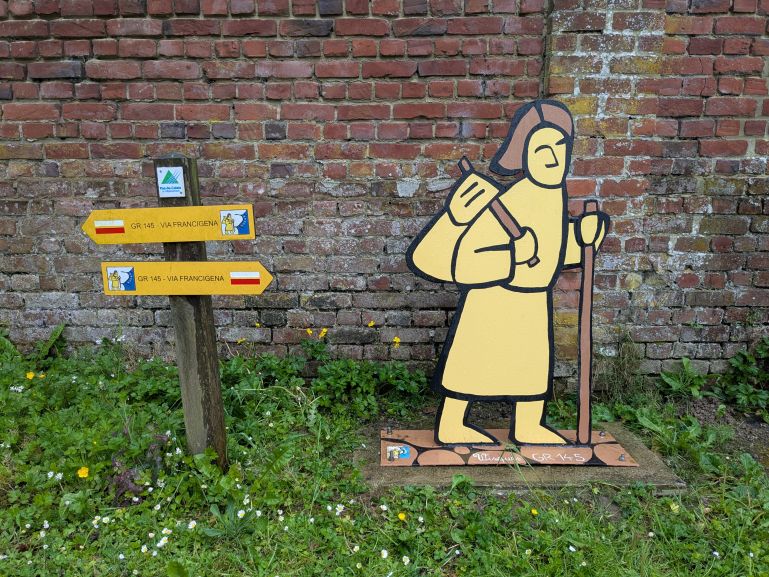
History of The Via Francigena in France
The Via Francigena is an ancient pilgrimage route from Canterbury to Rome. Its origins date back to the 10th century, when Archbishop Sigeric of Canterbury recorded the stages of his journey to Rome in 990 CE. His route became the traditional pilgrimage trail that thousands of pilgrims followed from England through France, Switzerland and Italy to reach the tombs of Saints Peter and Paul in Rome.
The name Via Francigena literally means “the road that comes from the realm of the Franks”. In medieval times, the route crossed a large portion of present-day France, passing through important religious and cultural centres such as Saint-Omer, Arras, Reims and Besançon before reaching the Jura Mountains and the Alps. France therefore formed a crucial section of the Via Francigena, providing pilgrims with monasteries and hospices that supported their journey to Rome.
The Protestant Reformation in the 16th century weakened the tradition of pilgrimage in many parts of northern Europe. However, renewed interest in pilgrimages has led to the revival of many pilgrimage routes all over the world.
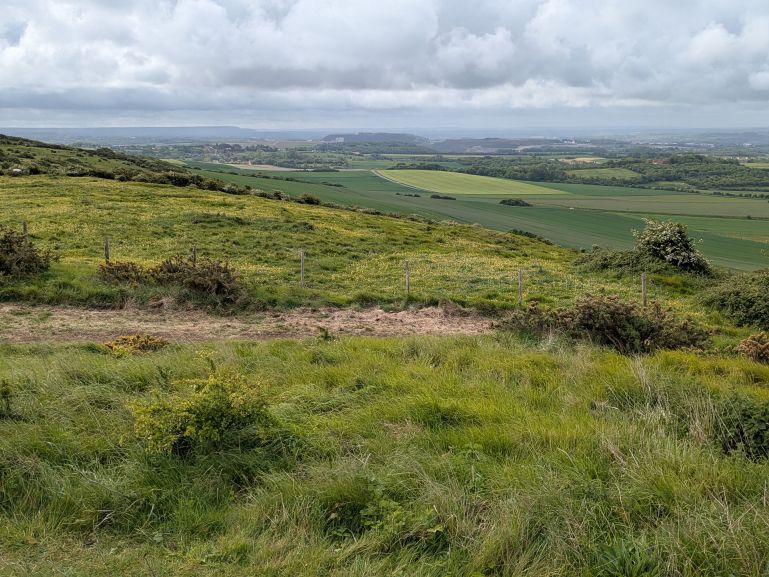
Via Francigena Itinerary: Calais to Saint Omer
The Via Francigena never experienced the same revival as the Camino de Santiago. As a result, it attracts far fewer pilgrims, especially on its French section. Much of the route passes through sparsely populated rural areas of France, where there is less infrastructure and less pilgrim’s accommodation.
The lack of development on the Via Francigena in France is part of the route’s appeal. I cherished the quiet countryside, the small villages and the feeling of following a less-commercialized medieval path. However, having to rely on hotels as a solo traveller, makes it a challenge to travel on a budget. Some pilgrims carry a tent, but even finding campsites along the trail in France is not always easy.
Therefore, I decided, with pain in my heart, to only hike a few sections of the Via Francigena in France. I opted for the part from Calais to Saint-Omer, because of the availability of good campsites.
Saint-Omer is not on the official modern Via Francigena route. Which surprised me as bishop Sigeric almost certainly passed through at Saint-Omer during his journey. Furthermore, Saint-Omer was an important religious centre in medieval Flanders with a rich history and is still a beautiful town to visit.
One historical nuance with the official GR145 route is that Sigeric’s list records overnight stops rather than every place he passed through. Therefore, the exact roads he followed between stages are not always known with certainty. Today’s sections are a compromise between historical accuracy, practical considerations and scenery.
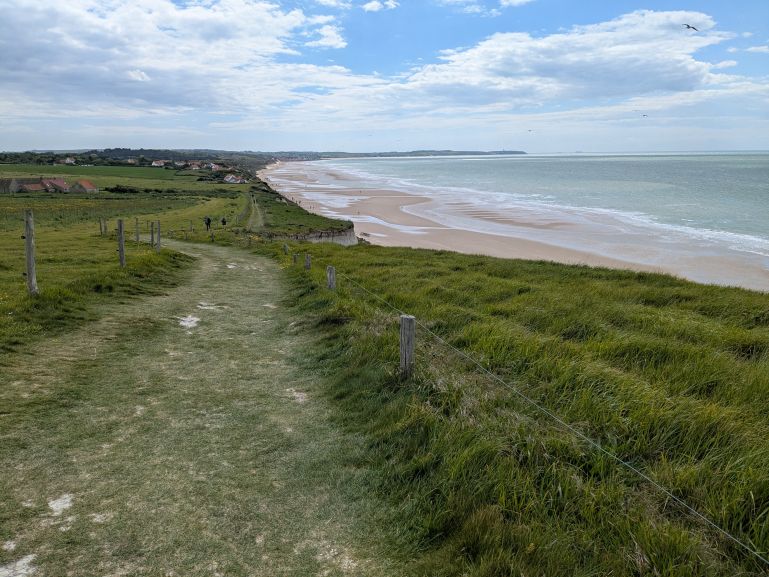
Day 1: Calais to Wissant (22 km)
Nowadays, the Via Francigena in France starts at Calais where pilgrims arrive by taking the ferry accross the Channel from England. Sigeric never visited Calais though. In medieval times Calais was a small fishing village and after hiking the Via Francigena in England from Canterbury to Dover, Sigeric took a small boat to the village of Wissant. In medieval times this was the shortest and most practical crossing over the sea.
From Calais there is a direct route to Guînes, the next stop on the Via Francigena. However, I do recommend to include the small detour to Wissant. Not only for historical reasons, but also because the trail from Calais to Wissant is an incredibly scenic coastal walk. In fact, it was one of my most beautiful hiking days on the Via Francigena in France.
The trail follows the Opal Coast, named for its constantly shifting water colors including a mesmerizing turquoise. As I walked along sandy beaches and coastal dunes I had beautiful views accross the English Channel. It was a clear day and I could see the White Cliffs of Dover on the other side. The views got more spectacular as I climbed up to the chalk cliffs of Cap Blanc Nez.
Highlights: German WW2 Bunkers along the beach, Cap Blanc Nez, Wissant beach
Difficulty: 22 km, moderate. Some stretches over the beach are a bit difficult because of the sand. Furthermore, there is a bit of climbing towards Cap Blanc Nez
Accomodation: Camping Municipal de la Source
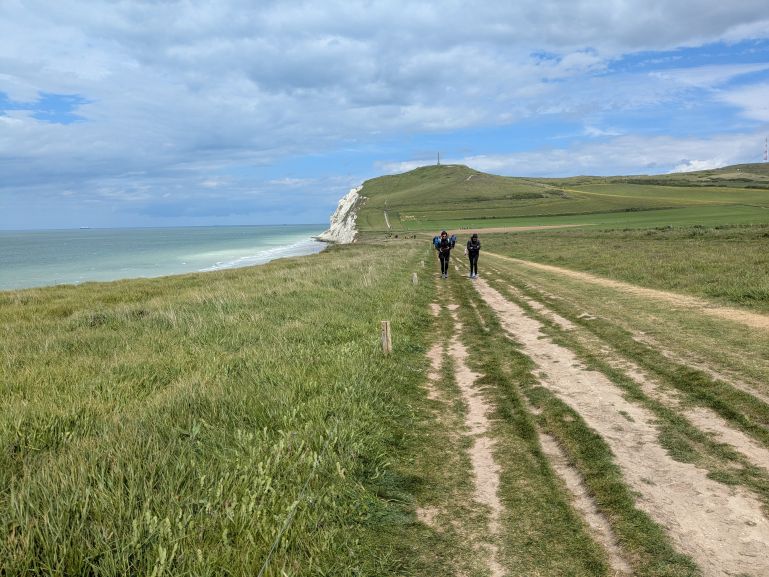
Day 2: Wissant to Guînes (26 km)
From Wissant the Via Francigena leaves the English Channel behind and heads inland across open farmlands and gently rolling countryside. The day started with a climb up ‘Mont de Couple’ and again I was lucky with clear views back toward the sea and some last glimpses on the White Cliffs of Dover.
Where I met lots of day hikers while walking from Calais to Wissant, I rarely met any other hikers on the quiet country lanes from Wissant to Guînes. I only heard the occasional pheasant and saw more hares running through the fields than people.
Unfortunately there are not many benches as well. I had to wait till the village of Caffiers where everything was closed, except for the church. Luckily, I bought enough food for lunch at the bakery in Wissant. Guînes too is a small and quiet village with not much going on.
Highlights: views from Mont de Couple, forests of Guînes
Difficulty: 26 km, moderate as it is a long day
Accomodation: Castel Camping La Bien Assise
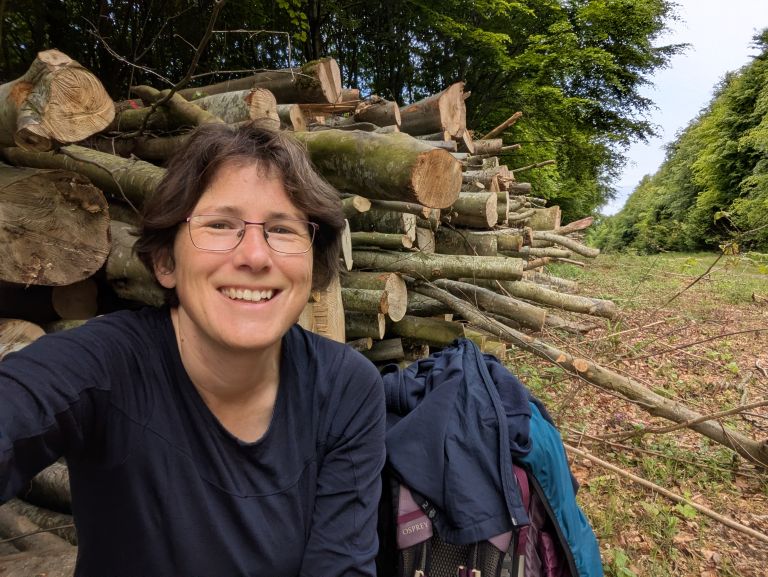
Day 3: Guînes to Licques (17 km)
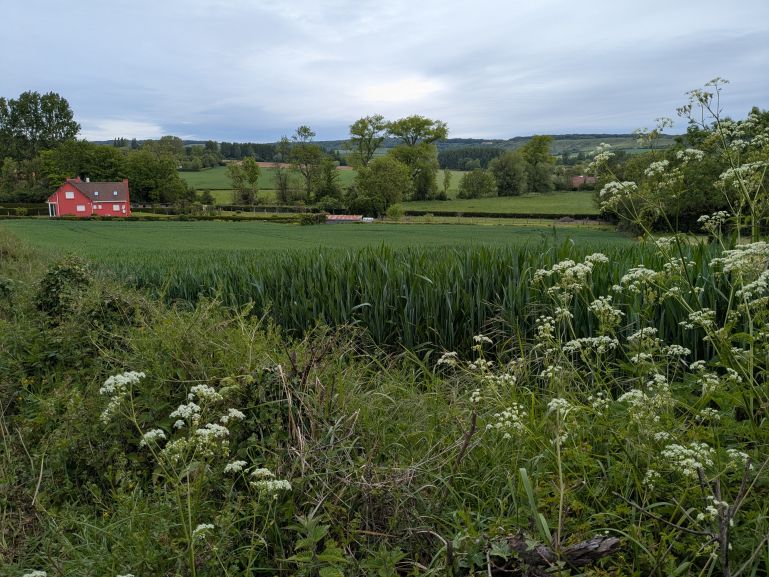
From Guînes the Via Francigena continues through the forests of Guînes. The whole morning I hiked on my own through desolate muddy forest tracks. The forest was full of birdlife and I even spotted a deer. The path gradually went up and once I was back in the open farmfields there were beautiful views on the rolling hills of the French countryside.
Licques has an impressive medieval abbey church that is worth a visit. In the church book I could see that I was not the only pilgrim on the Via Francigena, even though I haven’t met any so far.
Highlights: forests of Guînes, Church in Licques
Difficulty: 17 km, easy
Accomodation: Camping L’Orée des Caps
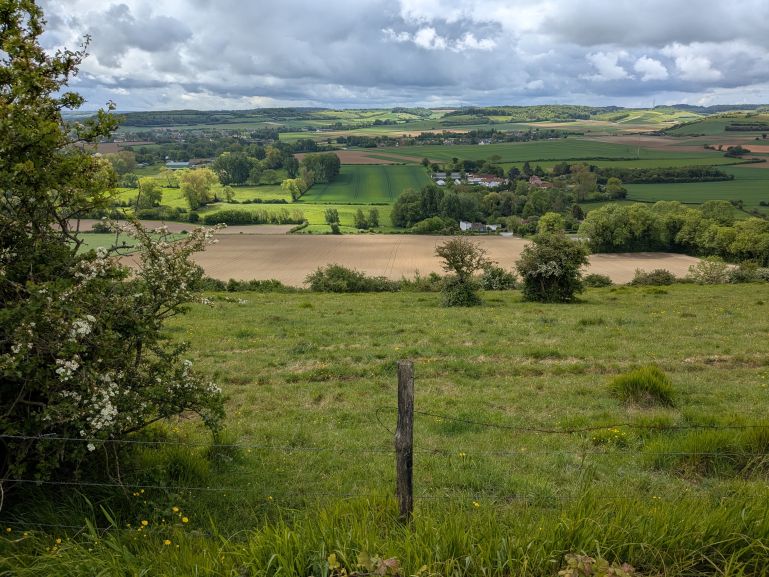
Day 4: Licques to Wisques (26 km)
From Licques to Wisques there are two options on the Via Francigena. There is a 35 kilometer trail that follows the official GR145 through Tournehem and a more direct route that is 26 kilometers that is described in the guidebook from Ben Teunissen.
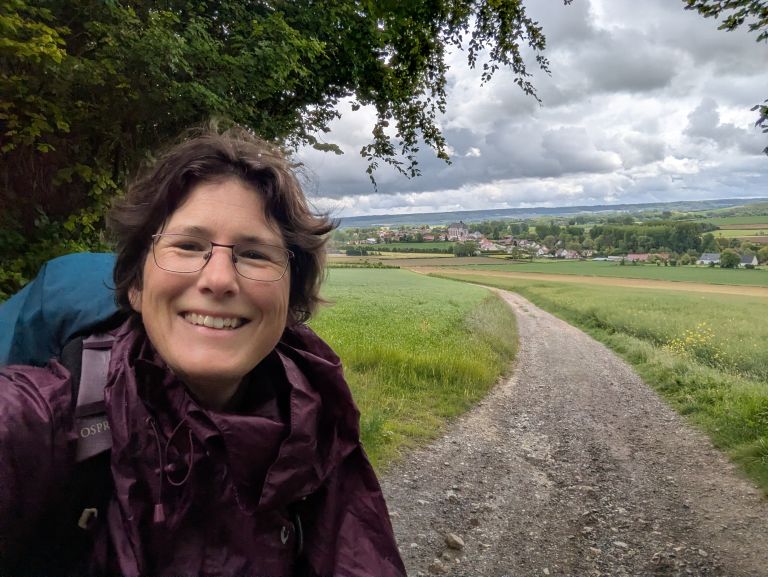
Both go through quiet countryroads and farmlands. As the weather forecast was not that good I decided to hike the shorter route. The scenery through rural France was beautiful and the trail was easygoing, but with heavy rain it was a difficult day.
In Wisques I stayed at the Notre Dame Abbey with the Benedictine nuns. It was a lovely place and from my room I could see Saint-Omer in the distance.
Highlights: Abbaye Saint Paul & Abbaye Notre Dame
Difficulty: 26 kilometers (route from Ben Teunissen), easy
Accomodation: Abbaye Notre Dame de Wisques
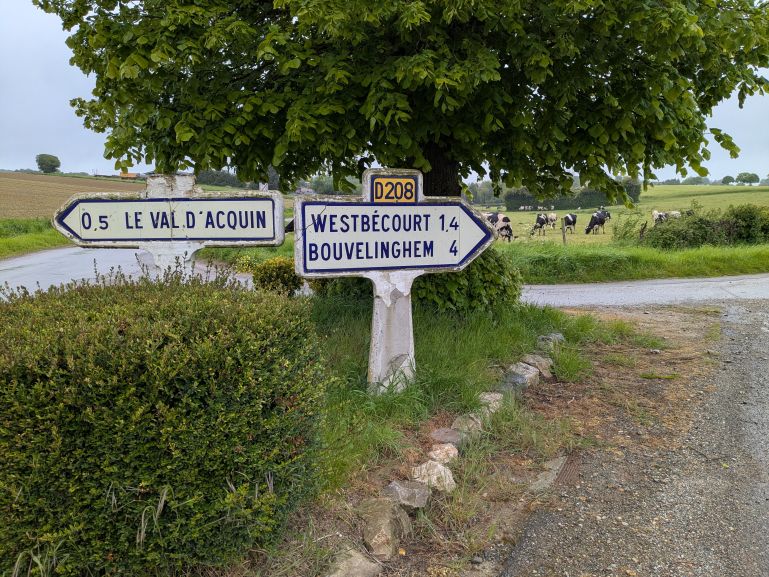
Day 5: Wisques to Saint-Omer (6km)
From Wisques to Saint-Omer it is only 6 kilometers through open farmfields. After days in the desolate countryside, Saint-Omer feels like a substantial town with a medieval atmosphere due to its remarkably preserved historic centre.
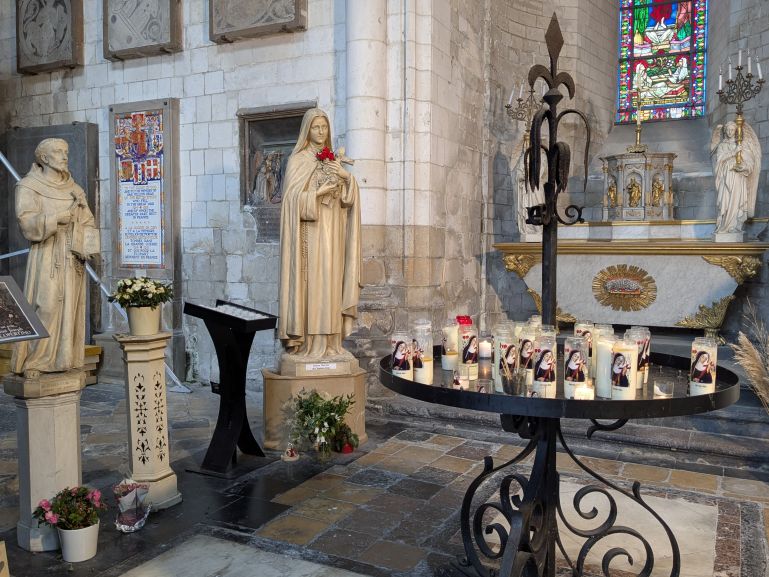
Saint-Omer was a pilgrimage destination in itself with devotees visiting the shrine of Saint Erkembode inside the cathedral. Erkembode was a saint that travelled throughout northern France on foot to preach christianity. He became almost paralyzed near the end of his life. People began leaving children’s shoes on his tomb while praying for children who had difficulty walking. Up till this day you can find a heap of shoes on his tomb in the cathedral.
Saint-Omer is also home to a medieval library collection dating back to the 7th century. In general I really enjoyed my visit to Saint-Omer and think it is a lovely town well worth the small detour on the Via Francigena.
Highlights: Saint-Omer Cathedral and the tomb of Saint Erkembode, Medieval library collection
Difficulty: 6 km, easy
Accomodation: Ibis budget
Via Francigena in France Travel Tips
Accomodation on the Via Francigena in France
Unlike the Camino le Puy, there are not so many dedicated pilgrim hostels or budget albergues on The Via Francigena in France. Finding low cost accomodation was a real challenge and in general there are few facilities in the rural villages in northern France.
Abbey walks provides an overview of available options as well as the Camino Ninja app and the official Via Francigena site. Some of the options listed are no longer available though. The most up to date list is a booklet published each year by the Federation Francaise Via Francigena and includes individual hosts willing to accomodate pilgrims.
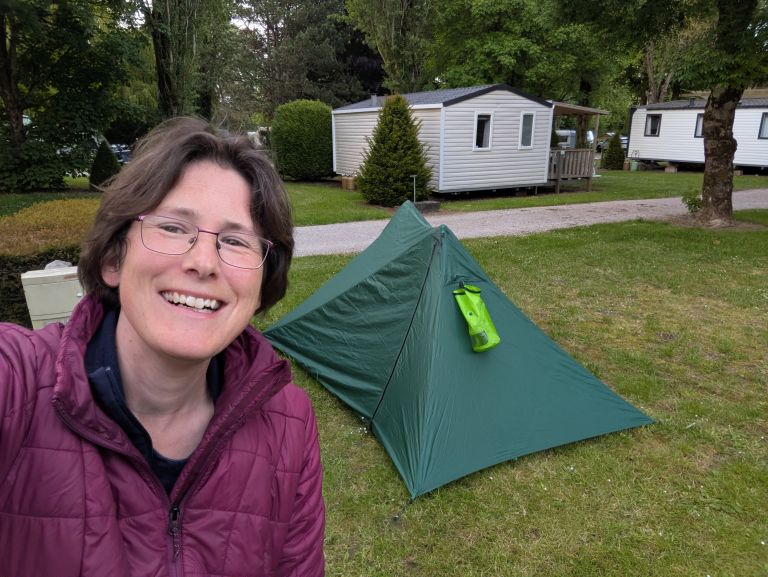
Considering the lack of cheap accomodation options on the Via Francigena in France, I decided to bring my own tent. Although wild camping is not allowed in France there are some good campings on the Via Francigena from Calais to Saint-Omer. Further on the trail, even campings are more difficult to find and often not directly on the GR145 trail.
Food on the Via Francigena in France
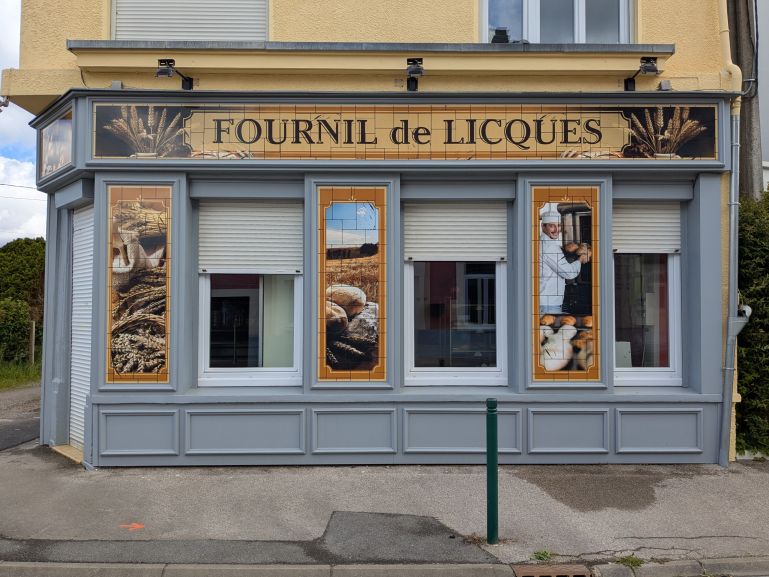
Although the Via Francigena in France passes through numerous villages, it isn’t as easy to find food options as expected. Services are limited in the rural areas and small businesses have odd opening hours. Even if there is a bakery or grocery store in a village it might be closed and you can not rely on finding food at every stop.
Therefore I recommend to stock up on snacks and drinks when you do find a grocery store that is open and always have some emergecy snacks in your backpack. I always felt lucky finding an open bakery. The bakeries in France are open in the mornings and are a great place to buy delicious fresh bread and pastries.
Transport on the Via Francigena in France
Calais and Saint-Omer both have train stations with trains to Paris, Lille or Arras. You can check the timetables and book your tickets on SNCF. The earlier you book, the cheaper your tickets.
From Calais to Saint-Omer there are very little public transport options. Calais runs free public buses that goes as far as Wissant and Guînes. From Guînes to Saint-Omer options are very few to non existent.
Navigation on the Via Francigena in France
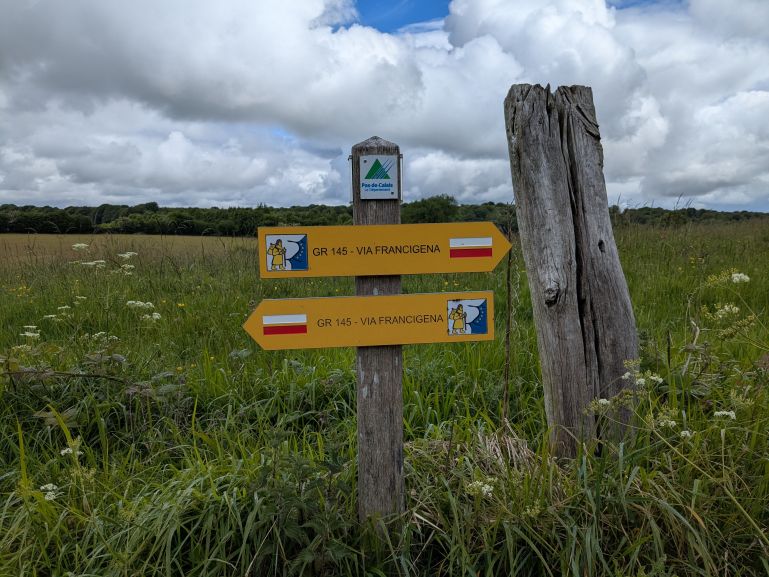
The Via Francigena from Calais to Saint-Omer is well marked and I found it very easy to find my way. The Via Francigena in France is almost completely the same as the GR145 with frequent signs. Although I had the Lightfoot guide on my phone I rarely had to use it on the trail to navigate.
I did sometimes consult my GPS tracks. I downloaded the gpx files for the sections from Calais to Saint-Omer from the Via Francigena website. The Via Francigena works together with Alltrails, an app where you can add the most recent gpx files. In addition, the Camino Ninja app also features the Via Francigena and there is the official Via Francigena app.
Safety on the Via Francigena in France
The Via Francigena in France from Calais to Saint-Omer is a very safe trail, because of the easy terrain. Although there are few other pilgrims and there are some isolated stretches, you’re rarely very far from civilization.
The main risks are typical hiking hazards rather than crime, including slippery paths, uneven terrain, road crossings, and occasional navigation errors where waymarking is unclear. By carrying suitable gear, checking the weather, and following basic hiking precautions, you can prevent major problems from happening.
You can prevent physical injuries to some extent by not overestimating yourself. Listen to your body and start with short stages, gradually building up your strength. Although there are pharmacies in the bigger cities, they are not always available in the smaller villages. Therefore it is good to carry a basic first aid kit with you.
Solo Female Travel on the Via Francigena
I hiked the Via Francigena from Calais to Saint-Omer as a Solo Female Traveller and in my experience it was very safe. I never felt uneasy or unsafe. The French people along the way are extremely friendly and welcoming and it would have been easy to find help when needed.
Planning the Via Francigena in France
How to Prepare for the Via Francigena
Training: Some people have a training schedule to build their endurance before hiking the Via Francigena in France. I did not do this, but I spend my weekends doing day hikes with my fully packed backpack. This helped a lot in adjusting my backpack before the trip so that it was comfortable.
Book your Accomodation: Accomodation on the Via Francigena in France is difficult to find, especially in the rural areas. With few options I recommend to book your accomodation at least 1 or 2 days in advance.
Learn basic French: French is the main language on the Via Francigena. It really helps if you learn the basics through Duo Lingo beforehand.
Buy the proper gear: if this is the first time you do a multi day hike, you probably need to invest in your hiking gear. There are a lot of fancy and expensive items out there, but in the end you don’t need that much. I will share more tips on investing in your hiking gear below.
If you want to know what to bring along I can recommend my Camino Packing List that I used when hiking the Via Podiensis as well as the Via Francigena.
When to go hiking the Via Francigena in France
The best time to hike the Via Francigena in northern France is during late spring (May–June) or early autumn (September–early October), when temperatures are mild, the countryside is at its most beautiful, and walking conditions are generally comfortable. Spring brings lush green landscapes and wildflowers, while autumn offers harvest-season scenery and colorful foliage.
Summer can be hot and you will be exposed to the sun on many sections of the route. This makes the long walking days more challenging. Winter often brings cold, wet weather and muddy paths. Finding accomodation in winter is an even bigger challenge as campings close down.
Resources on the Via Francigena in France
There are an increasing number of books about the Camino in France, but books about the Via Francigena are still less common. Nevertheless, there are some good guidebooks on the Via Francigena in France and a small number of memoirs written by pilgrims.
Cicerone Guidebook: Cicerone covers the Full Via Francigena in four different guidebooks. For the French part from Calais to Switzerland you need Part 1 from Canterbury to Lausanne. The maps are useful and the guide also provides some historical background information.
Lightfoot Guide: The Lightfoot Guide is more up to date then Cicerone and has very detailed maps, making it impossible to get lost. Another advantage is that they are available as e-books.
Weg van de Franken: Dutch readers can download the guidebooks from Ben Teunissen for free on his website ‘De Weg van de Franken‘. The guides haven’t been updated since 2022 and he sometimes took a different route from the ones described in Cicerone or Lightfoot. Nevertheless I loved reading the guidebooks for its historical background information. The section from Calais to Saint-Omer is here.
Timothy Egan: A Pilgrimage to Eternity: Timothy Egan describes his pilgrimage to Rome starting in Canterbury. It’s a little bit of a dissapointment to read that he actually did not walk the full way. As a true modern pilgrim he skipped large sections by taking buses or trains. Still, I enjoyed reading his book as he delves into history with intriguing stories and anecdotes of the places he passed through. His first chapters describe the Via Francigena from Calais to Saint-Omer and he actually convinced me to include a visit to Saint-Omer with its beautiful cathedral and ancient library.
Derry Brabs – Pilgrimage: Derry Brabs released a very beautiful picture reference book, called Pilgrimage, that also includes the Via Francigena and other pilgrimage routes in Europe.

Sustainable travel on the Via Francigena in France
Traveling sustainably on the Via Francigena in France is essential to minimize your environmental impact and preserve the area’s natural beauty for future generations.
Leave no trace principle: When hiking the Via Francigena in France, stick to designated trails to protect the environment. Straying off the marked paths can cause soil erosion and damage to plant life.
I encourage you to take all your trash back with you and dispose of it responsibly. In other words, leave no trace of your visit. It is even better when you bring something to pick up any of the trash that other people left behind. To avoid single-use plastics, invest in reusable items. For example, you can bring your own water bottle.
Disclaimer: This post with a travel guide about walking The Via Francigena in France from Calais to Saint-Omer contains affiliate links. If you buy any service through any of my links, I will get a small commission at no extra cost to you. These earnings help me to keep Backpack Adventures alive! Thanks for your support!